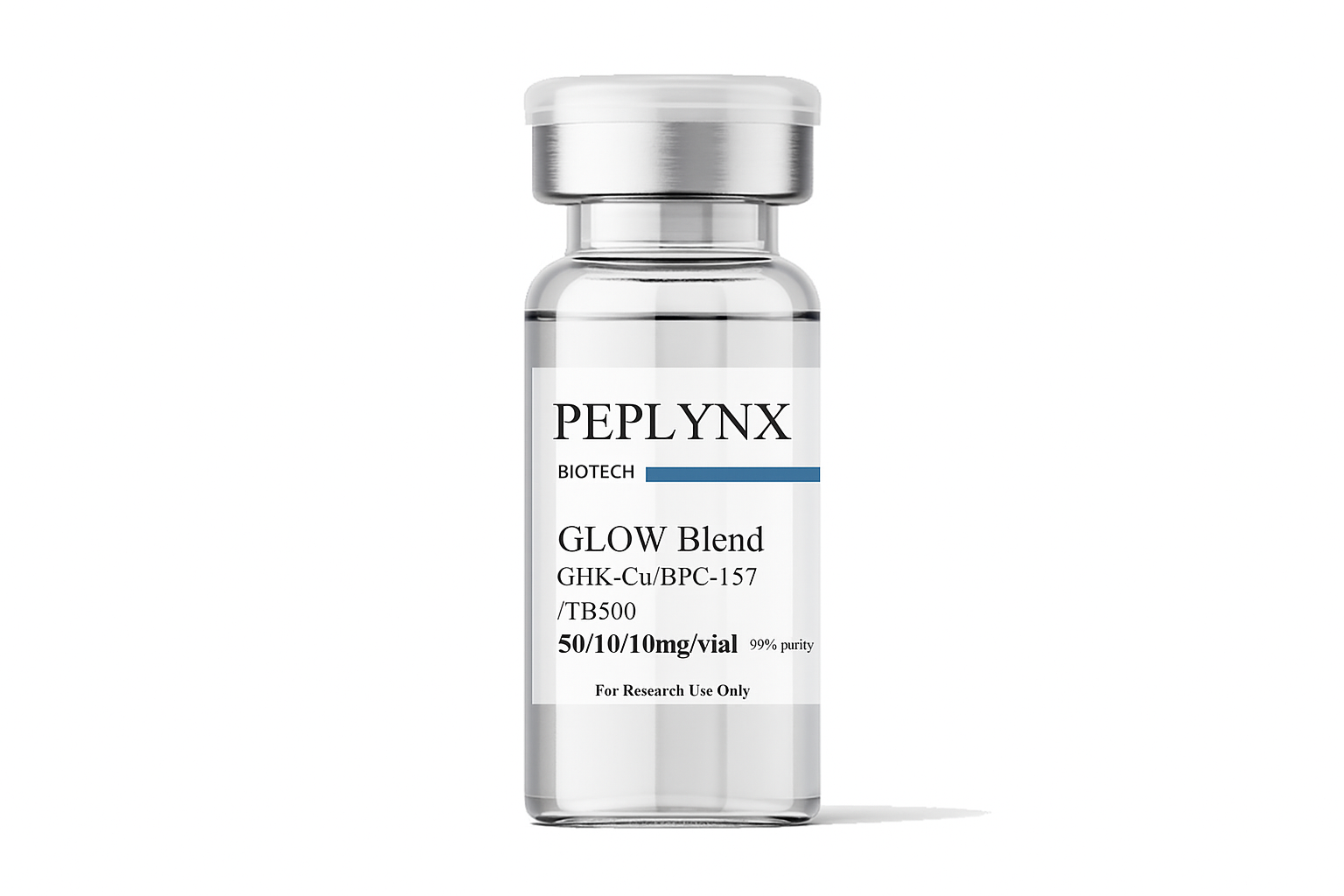
The GLOW Blend combines three widely studied research peptides—BPC-157, TB-500, and GHK-Cu—each examined for distinct roles in cellular organization, tissue-related pathways, and biochemical signaling. When used together in controlled laboratory settings, researchers often explore how their individual mechanisms may interact or complement one another in models of structural repair, matrix remodeling, and oxidative stress modulation.
This blend is formulated to simplify experimental design by providing a single research compound that allows investigators to evaluate combined pathway interactions rather than testing each peptide independently.
This combination provides researchers with a streamlined approach for analyzing how multiple regenerative and anti-inflammatory pathways may function concurrently.
Synergistic Focus:
1. Angiogenic Signaling Pathways
- TB-500 and BPC-157 are frequently studied for their influence on vascular growth factors in preclinical models.
- GHK-Cu is examined for its impact on endothelial cell behavior and copper-dependent signaling.
2. Cellular Migration & Matrix Remodeling
- TB-500 is researched for its interaction with actin and its effects on cellular motility.
- GHK-Cu and BPC-157 are used in models investigating extracellular matrix (ECM) production, fibroblast activity, and tissue structural organization.
3. Oxidative Stress & Inflammatory Pathways
- All three peptides are evaluated for their roles in modulating oxidative stress markers, cytokine activity, and gene expression linked to tissue resilience in experimental systems.
Synergistic Benefits
- Enhanced Angiogenic Signaling
- Coordinated Cellular Migration
- Multi-Layered Matrix Remodeling
- Complementary Anti-Oxidative Mechanisms
- Broader Inflammatory Pathway Modulation
- Integrated Gene Expression Exploration
- Multi-Pathway Tissue Repair Modeling