15% OFF
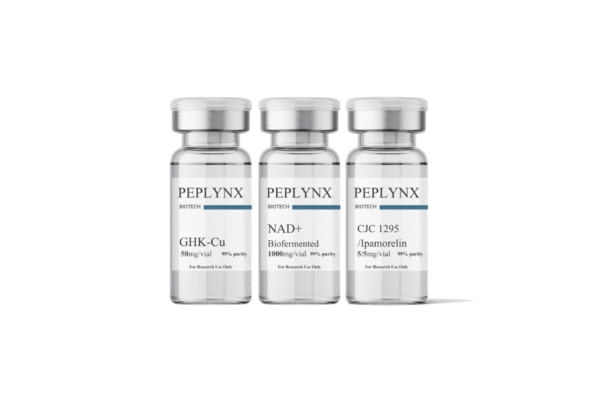
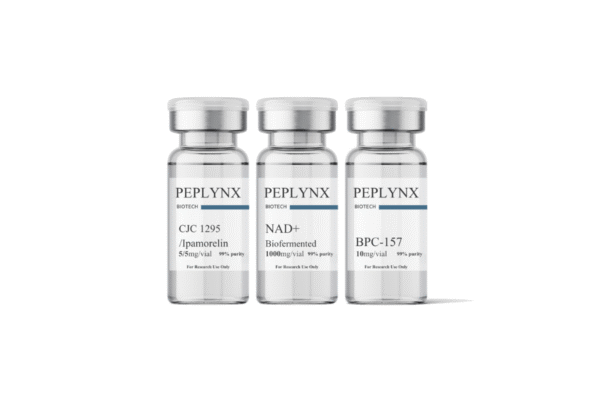
Research Bundle 4 (GHK-Cu, NAD+, CJC 1295/Ipamorelin)
A peptide stack designed to support visible skin vibrancy, collagen integrity, and deeper regenerative pathways — from cellular energy to hormone signaling.
Description
Disclaimer: For Research Use Only. Not for Human Consumption.
Storage Instructions (Lyophilized Peptides)
All peptides supplied by Peplynx are produced using a controlled lyophilization (freeze-drying) technique. This process removes water under low temperature and low pressure, allowing the material to remain stable during transport for an extended period. In lyophilized form, peptides typically maintain their structural integrity for approximately 3–4 months during normal shipping and handling conditions.
About the Lyophilization Process
Lyophilization, also referred to as freeze-drying or cryodesiccation, involves freezing the peptide mixture and then reducing the surrounding pressure so the water transitions directly from solid to vapor. This produces a dry, porous, crystalline material known as a lyophilized peptide cake.
The resulting powder is designed to be stable at ambient temperature until preparation for laboratory use.
Recommended Handling After Receipt
Upon receiving your peptides, they should be kept cool, dry, and shielded from direct light.
- If the peptide will be used within the coming days or weeks, refrigeration (2–8°C / 36–46°F) is generally sufficient.
- For short-term laboratory workflows, most lyophilized peptides remain stable at room temperature for a period of weeks, though cooler storage is preferred when possible.
Long-Term Storage Guidelines
For extended storage — ranging from several months to multiple years — peptides perform best when kept in a freezer.
- Ideal long-term conditions: –20°C to –80°C (–4°F to –112°F).
- Extremely low temperatures help preserve structural integrity and reduce potential degradation over time.
When planning to store peptides for lengthy periods, freezing is strongly recommended to maintain optimal research-grade stability
Additional information
| GHK-Cu | 50 mg |
| NAD+ | 1000mg |
| CJC-1295/Ipamorelin | 5mg/5mg |