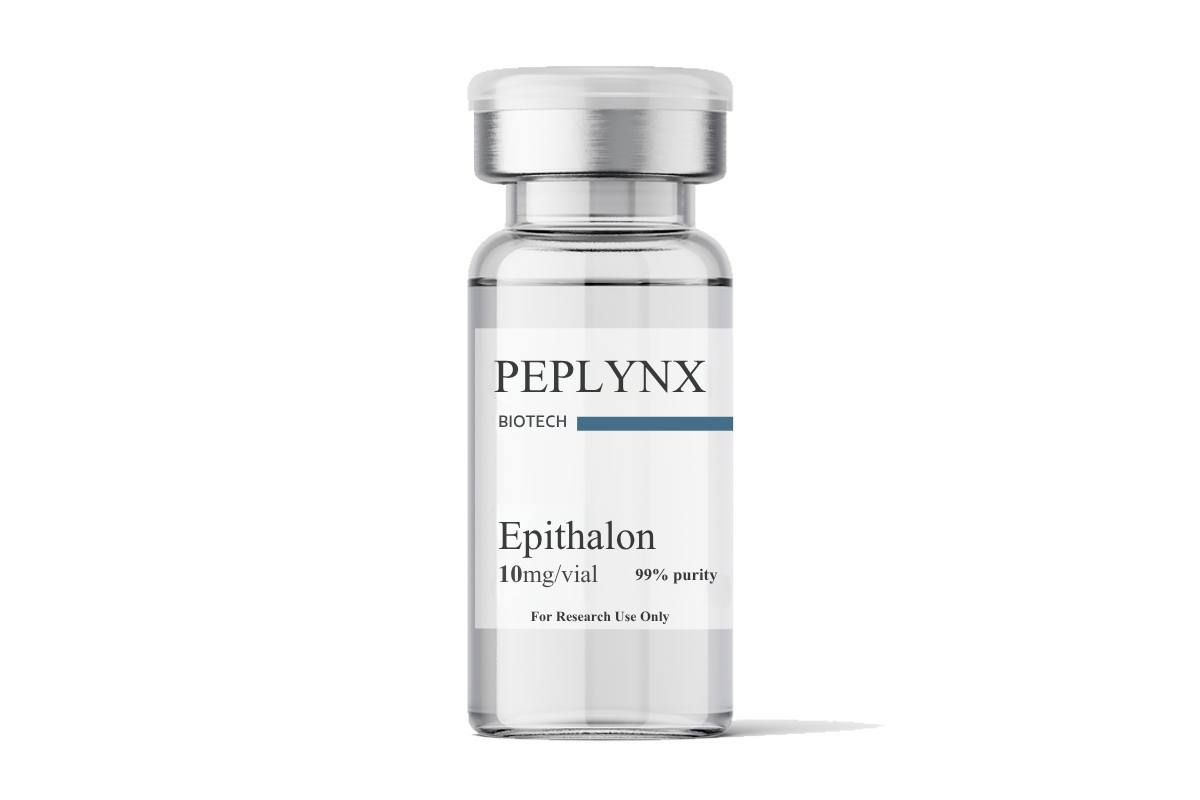
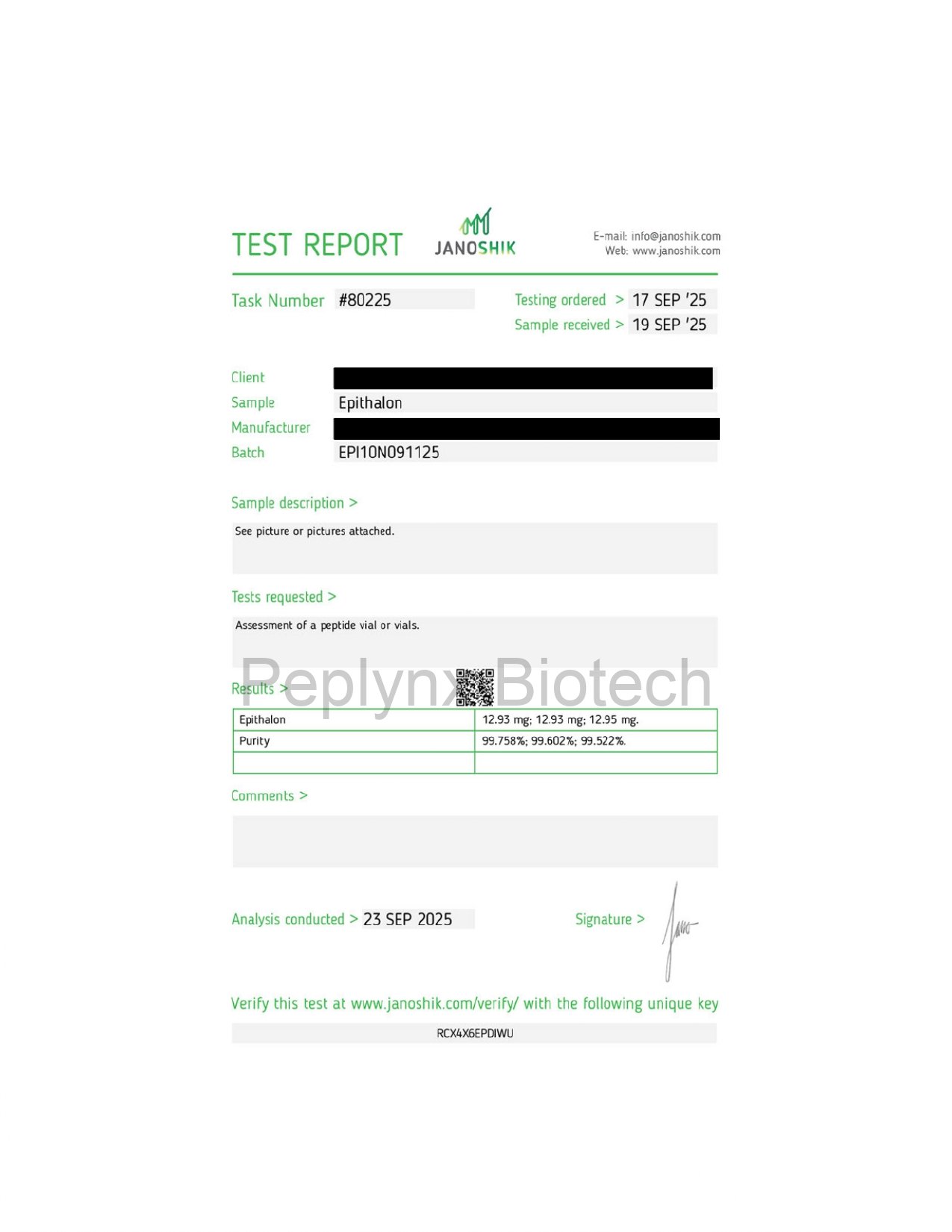
Epithalon (Epitalon) is a synthetic tetrapeptide consisting of the sequence Ala–Glu–Asp–Gly, originally developed through peptide bioregulation research in Russia. In controlled laboratory environments, this peptide is widely utilized to study telomerase-related pathways, cellular aging mechanisms, and circadian rhythm regulation.
Preclinical models frequently examine Epithalon for its ability to influence telomerase enzyme activity, telomere dynamics, and gene-expression patterns associated with cellular lifespan and replication. Additional research explores Epithalon’s effects on melatonin-related signaling, pineal peptide pathways, and oxidative-stress–modulating enzymes, including superoxide dismutase and glutathione-based systems.
Its structural simplicity, high stability, and predictable degradation profile make Epithalon a reliable tool in molecular biology studies investigating mechanisms of cellular homeostasis, DNA-protective pathways, and peptide-regulated transcriptional activity.
Primary Research Areas:
- Telomerase activation and telomere-length regulation
- DNA replication and cellular aging models
- Pineal-peptide and melatonin-related signaling pathways
- Circadian rhythm modulation studies
- Oxidative-stress enzyme regulation (SOD, GPx, GST)
- Gene-expression and transcriptional-regulation models
- Comparative studies with endogenous bioregulatory peptides
Epithalon Structure:
Molecular Formula: C14H22N4O9
Molecular Weight: 390.349 g/mol
PubChem ID: 219042
CAS Number: 307297-39-8
Synonyms: Epithalon, Epithalone, Epithalamin analog, AlaGluAspGly, Tetrapeptide Epitalon, Epitalion