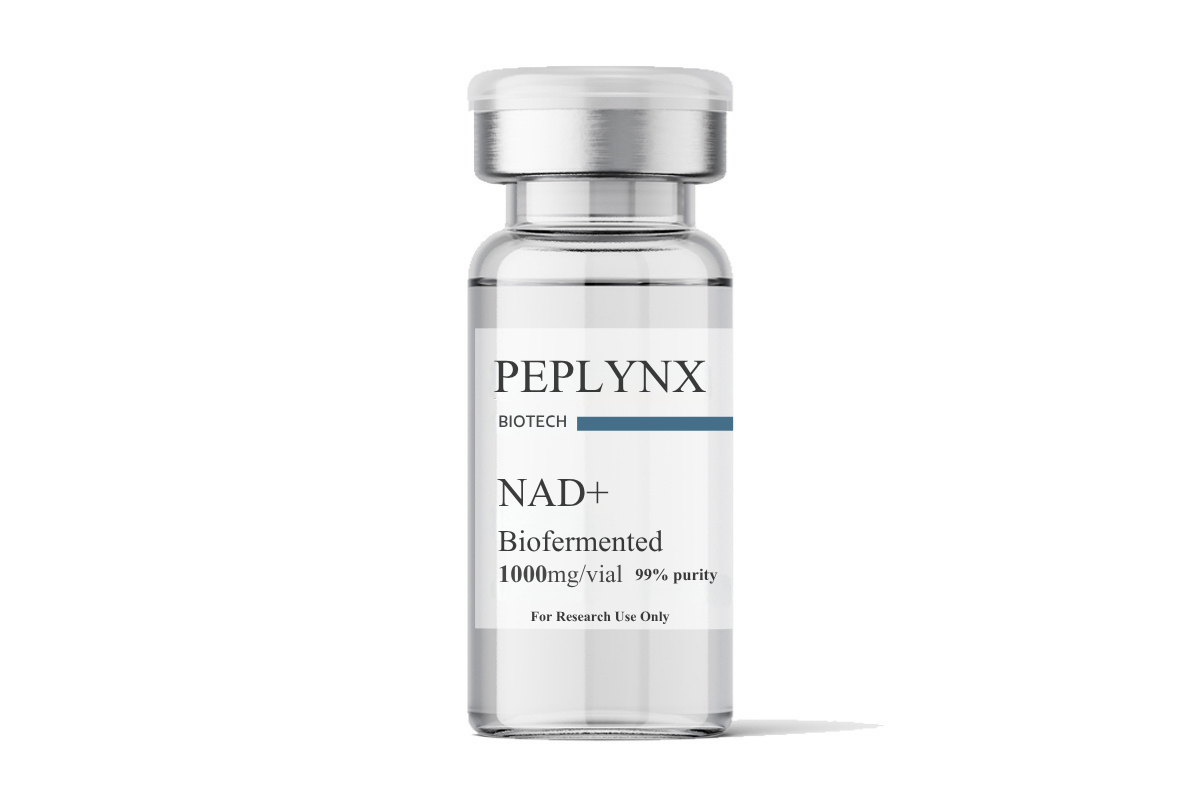
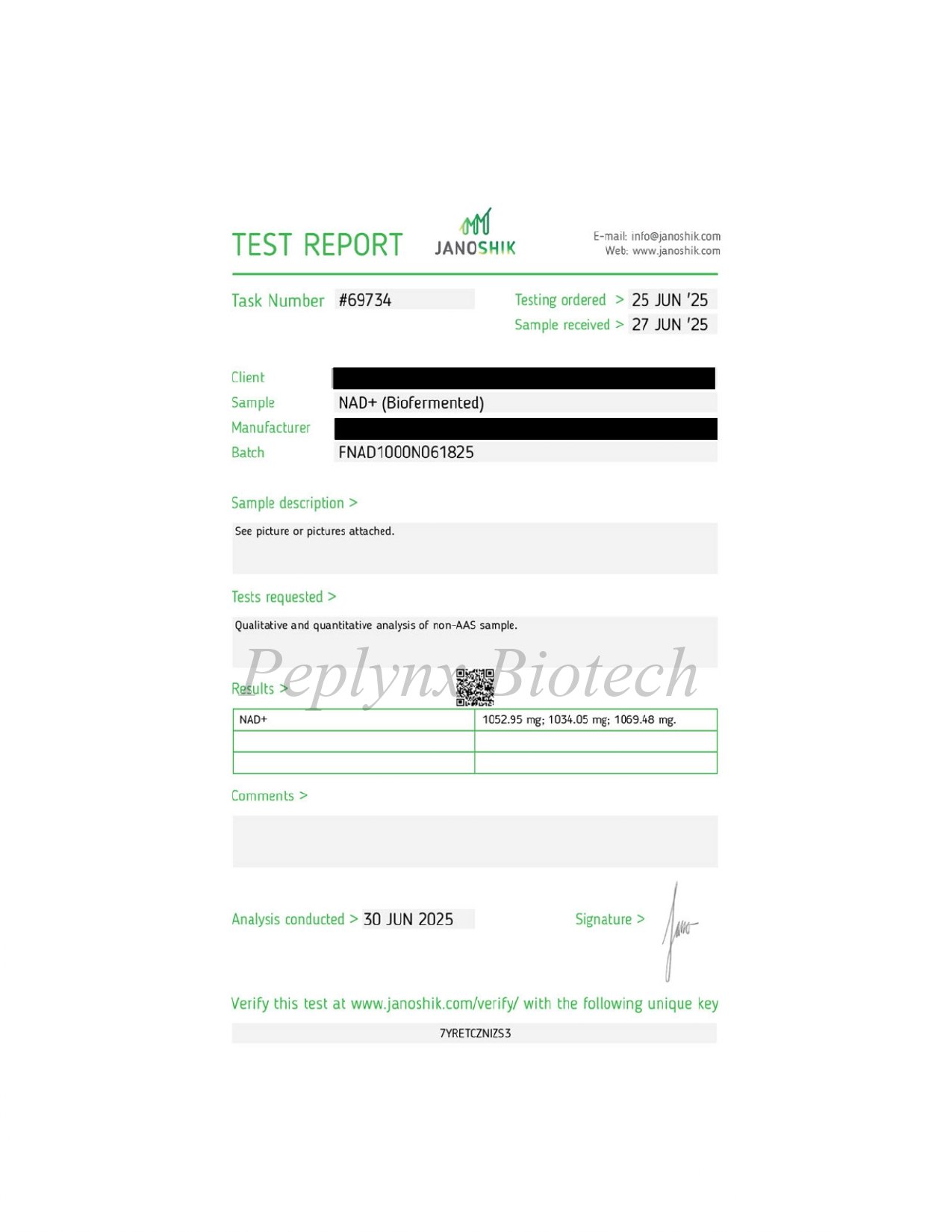
NAD+ (Nicotinamide Adenine Dinucleotide) is an oxidized coenzyme widely utilized in laboratory studies for its essential role in redox reactions and cellular energy transfer. As a central electron carrier, NAD+ participates in metabolic pathways that researchers investigate to better understand mitochondrial function, enzymatic activity, and cellular stress responses.
In controlled experimental environments, NAD+ is frequently used to study sirtuin regulation, DNA repair mechanisms, oxidative metabolism, and pathways related to cellular aging. Its involvement in over 500 enzymatic reactions makes it a core molecule in metabolic and biochemical research models.
Primary Research Areas:
- Redox biochemistry and electron-transfer pathways
- Mitochondrial function and metabolic regulation
- Sirtuin enzyme activity
- DNA repair and genomic stability models
- Cellular stress and aging mechanisms
- PARP-related biochemical pathways
- Energy metabolism research
NAD+ Structure:
Molecular Formula: C21H27N7O14P2
Molecular Weight: 663.43 g/mol
PubChem ID: 925
CAS Number: 53-84-9
Synonyms: β-NAD+, Coenzyme I, DPN, Cozymase, Nadide