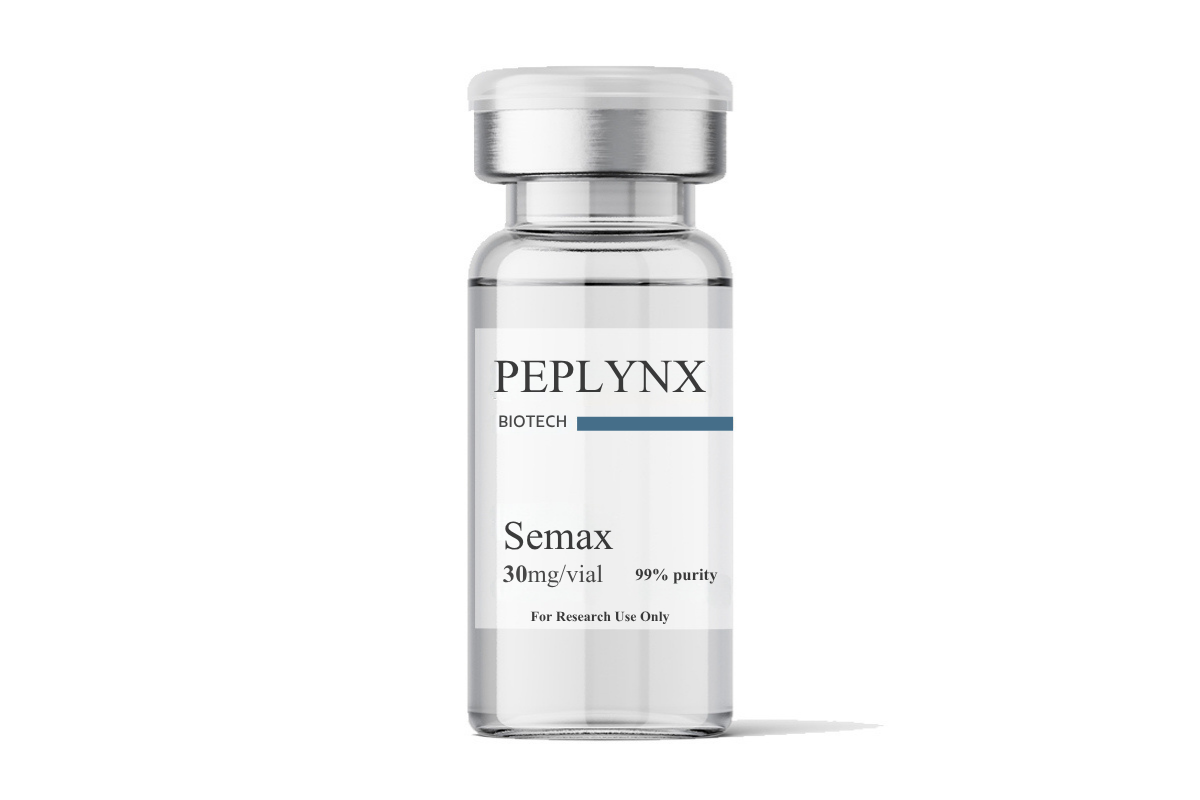
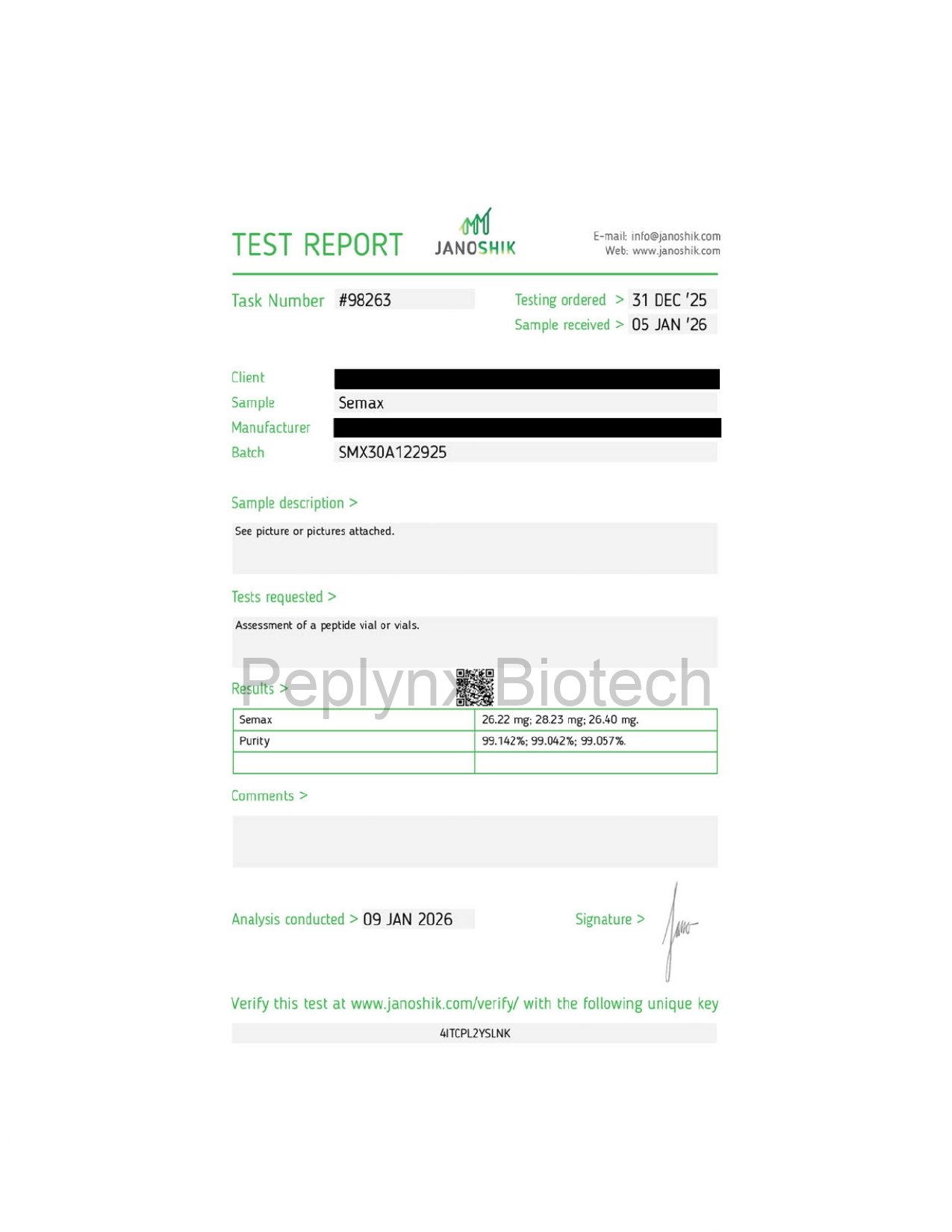
Semax is a synthetic heptapeptide derived from an adrenocorticotropic hormone (ACTH) fragment. Designed as a non-glycosylated polypeptide, Semax is widely utilized in neuroscience research for its ability to interact with melanocortin receptors and influence intracellular signaling pathways in controlled laboratory environments.
In preclinical studies, Semax is frequently examined for its effects on neuropeptide signaling, synaptic modulation, and transcriptional pathways associated with brain-derived neurotrophic factor (BDNF) and TrkB receptor expression. These properties make it a valuable tool for investigating molecular mechanisms related to neuroplasticity, neuronal adaptation, and central nervous system regulatory circuits.
Its structural stability and predictable degradation behavior enable consistent experimental use, particularly in models exploring stress-response pathways, cognitive signaling, and peptide-receptor interactions.
Primary Research Areas:
- Melanocortin receptor interaction studies
- BDNF and TrkB expression pathways
- Synaptic signaling and neuroplasticity models
- Peptide-induced transcriptional regulation
- Stress-response and neuroendocrine signaling
- CNS peptide-receptor communication
- Comparative studies with ACTH-derived fragments
Semax Structure:
Molecular Formula: C37H51N9O10S
Molecular Weight: 813.9 g/mol
PubChem ID: 981112
CAS Number: 80714-61-0
Synonyms: ACTH(4-7)-Pro-Gly-Pro, Met-Glu-His-Phe-Pro-Gly-Pro (MEHFPGP)